
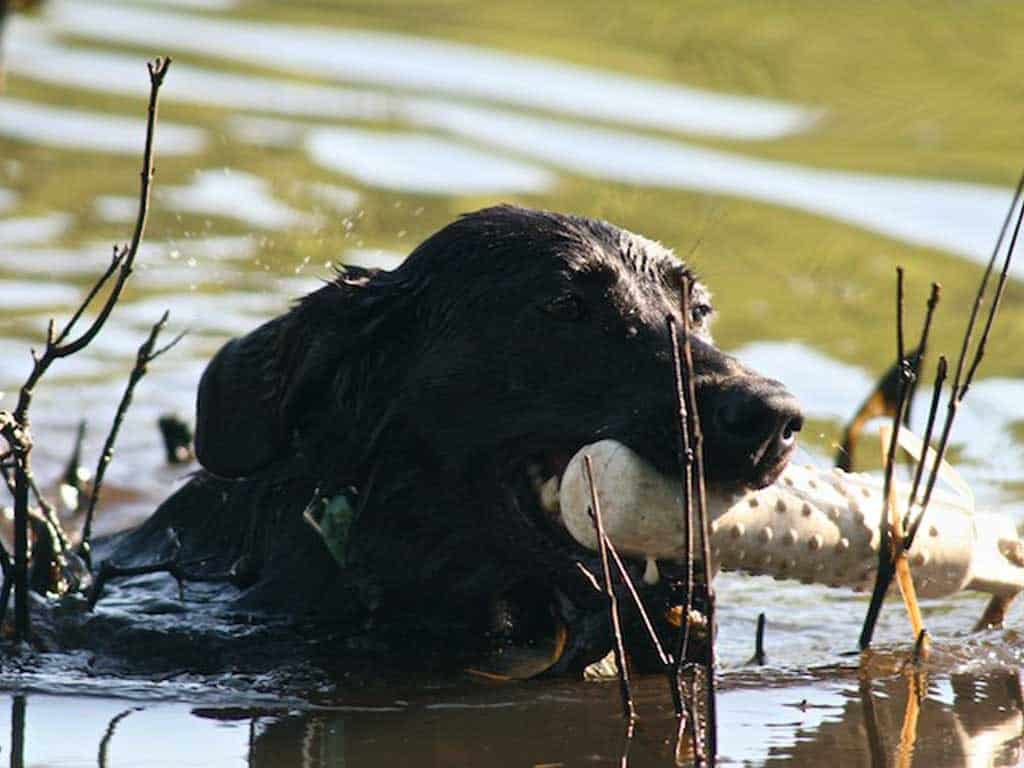
Training programs built around your dog’s job.
From basic obedience to advanced hunt training and deer recovery, every program is tailored to the dog in front of us — at its own pace, on 180 acres built for the work.
01 — How Training Works
A full range, from puppy to finished gun dog
All training includes boarding. Dogs must be current on vaccinations, including Bordetella — please bring a complete shot record on drop-off. Before your dog goes home, Chris walks you through the techniques used so the training holds up under your own handling.
RETRIEVER
Retriever Training
Marking, steadiness, blind retrieves, and water work for Labs and other retrieving breeds headed for the marsh or the field.
UPLAND
Upland Bird Training
Pointing, quartering, and steady-to-flush work developed on live birds across our fields and cover.
VERSATILE
Versatile Dog Training
For breeds like the Pudelpointer that point, retrieve, and track — a combined program developing every skill a versatile hunter needs afield.
OBEDIENCE
Obedience Training
The foundation underneath every other program: a dog that’s calm, controllable, and a pleasure to have in the house as well as the field.
PUPPY
Puppy Training
Early introductions to birds, gunfire, water, and basic obedience — building desire and confidence before formal hunt training begins.
SHED
Shed Dog Training
Antler and shed-hunting foundations that put a dog’s nose to work in the off-season.
02 — Featured Program
Blood Trail Tracking
Not every hit is a clean, close recovery. Deer travel further than hunters expect, cross water, and bed in cover that’s nearly impossible to search on foot. A trained tracking dog can follow a scent trail hours old, with little or no visible blood, and take a hunter straight to a downed animal that would otherwise be lost.
Why It Matters
A blood trail can fade fast — heat, rain, and time all work against a hunter searching by eye. A dog’s nose doesn’t need visible blood to work; it follows the wounded animal’s individual scent through timber, across creeks, and into cover a person would walk right past.
Who It’s For
Hunters who want their own dog trained as a dedicated tracker, versatile breeds like the Pudelpointer already bred with tracking instinct, and hunters who need a trained tracking team to call after a difficult shot.
How the Program Progresses
STAGE 1
Scent Introduction
Short, easy trails laid with deer scent build early confidence and drive, with a clear reward at the end of every line.
STAGE 2
Line Discipline & Handling
The dog learns to work a line methodically on a tracking lead, hold through turns, and communicate finds clearly.
STAGE 3
Aged Trails & Difficult Terrain
Trails get longer and older, laid through timber, heavy cover, and water crossings with minimal blood.
STAGE 4
Live Recovery Work
The dog puts it together on real recoveries, staying committed to one animal’s trail despite distractions.
03 — Timing Matters
When to call a tracker
A prompt call gives a tracking dog the best chance to succeed. Waiting too long lets the scent degrade and gives predators a chance to reach the animal first.
Call right away if
- You’ve lost the blood trail within the first 100 yards
- The deer ran out of sight without dropping
- You’re unsure about shot placement
- Several hours have already passed since the shot
Is it legal in Minnesota?
Minnesota permits the use of leashed tracking dogs to recover big game. Rules vary by state and can change, so confirm current regulations before your hunt.
04 — Questions We Hear Often
About our training programs
At what age can I start blood trail training?
Scent introduction can begin as a puppy, in a low-pressure, game-based way. More structured line work generally starts once a dog has solid basic obedience.
Do you offer tracking services, not just training?
Contact us directly during hunting season — call as soon as you know you need help, since a prompt start gives the best chance of recovery.
How long does a full training program take?
It depends on the program and the dog. Puppy foundations often run 4–6 weeks; advanced or versatile programs can take longer. We’ll walk through timing during your consultation.
Ready to book a training slot or a tracking call? Call (612) 490-4802 or email chris@graniteledgekennels.com.
Ready to talk about your dog?
Training openings, tracking calls, and Pudelpointer litters are limited — reach out and we’ll figure out the right fit. 14065 185th Avenue NE, Foreston, MN 56330.